
Indian Oil Corporation and its partner Oil India Ltd have won an oil block in Libya in the first ever joint foray in oil and gas exploration overseas.
Indian Oil Corporation may buy the government's 26 per cent stake in oil and gas exploration firm Oil India Ltd for about Rs 2,000 crore (Rs 20 billion).

Struggling to meet budget targets, the government had in the just concluded fiscal asked cash-rich PSUs to pay second interim dividend as well as undertake share buyback.
Oil and Natural Gas Corp will pay Rs 1025 crore (Rs 10.25 billion) to the state-run oil retailing firms for the losses they suffered during the second quarter for selling LPG and kerosene below the cost.

In November they had raised $2.19 billion from abroad, according to the Reserve Bank data released on Friday.
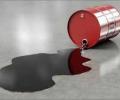
The Oil Ministry has fixed the subsidy payout by upstream firms like Oil and Natural Gas Corporation and Oil India Ltd at Rs 15,546.65 crore (Rs 155.46 billion) for the April-June quarter.
The militants fought a pitched gun-battle with CISF jawans in the camp, destroyed an empty crude oil tank and ransacked an office block before fleeing into a nearby jungle, a senior police officer said.
India's largest oil producer Oil and Natural Gas Corp, gas utility GAIL and exploration firm Oil India Ltd will pay Rs 3,246 crore (Rs 32.46 billion) to oil marketing firms to partly cover the losses they made in April-June.
The State-run Oil India Ltd will raise its stake in Numaligarh Refinery Ltd to 26 per cent to strengthen its position as an integrated oil company.

There is no one way to describe the 12 months that have gone by since India reported its first Covid-positive case on January 30, 2020.

These 7 blocks are adding exploration acreage of 18,510 square kilometres spread over three sedimentary basins of India and have a resource potential of approximately 33 billion barrels of oil and oil equivalent gas.
Oil and Natural Gas Corporation, Gas Authority of India and Oil India Ltd will pay Rs 1,200 crore (Rs 12 billion) to the state-run oil marketing firms for the losses they suffered during the first quarter for selling LPG and kerosene below the cost.

There were about 290 bandhs, blockades called by numerous organisations during fiscal 2012-13.

The world's fourth-biggest oil and gas consumer imports nearly three-quarters of its energy requirements

The blaze at the Oil India Ltd's oil well is so massive that it can be seen from a distance of more than two kilometres, eyewitnesses said.

Following the October 24 Supreme Court order, the department of telecom estimated that the total liability of 15 telecom companies, including penalties and interest, would be Rs 1.47 lakh crore.

India on Tuesday pitched for a stake in vast oil and gas fields as well as LNG terminals in the frozen Artic of Far East Russia as it looked to import more oil from the former Soviet republic as part of a strategy to diversify its energy basket.

Students' organisations and political parties are participating in the bandh to protest the Citizenship (Amendment) Bill, 2019, which seeks to grant Indian citizenship to non-Muslim refugees from Pakistan, Bangladesh and Afghanistan if they faced religious persecution there.
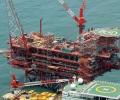
So far, 254 blocks of oil and gas have been auctioned.

A preliminary deal for sale of 49 per cent in Essar Oil to Rosneft was signed between the companies in July 2015.
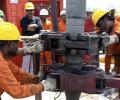
Upstream firms have a tremendous financial pressure due to selling crude at subsidised rates to oil marketing firms.
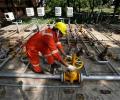
Based on this settlement, the Supreme Court has disposed of the case on February 20.

Petroceltic is headquartered in Dublin with offices in Edinburgh, London, Algiers, Varna, Cairo and Rome.

State-owned Oil and Natural Gas Corp (ONGC) will add about Rs 8,000 crore (Rs 80 billion) to its profits annually from near doubling of natural gas prices from next fiscal.

The reduction in natural gas prices would mean lower raw material cost for compressed natural gas (CNG) and natural gas piped to households (PNG).
Expecting oil prices to remain under pressure, Fitch Ratings said deregulation of diesel prices in October will help in lowering the under-recoveries (which is nothing but international petroleum prices minus the subsidised retail rates).

India on Wednesday announced auction of 46 small discovered oil and gas fields, holding about Rs 70,000 crore worth of hydrocarbon reserves.

Ajit Mishra, vice president, Research, Religare Broking, answers your queries.

OVL, along with Oil India Ltd, had in June agreed to buy Videocon Group's 10 per cent in the same block for $2.48 billion.
Analysts cut upstream firms' FY15 earnings estimates, while raising those for GAIL and Gujarat Gas.

The acquisition of stake in Progress Energy Resources Corp for 1 billion Canadian dollars ($900 million) mark IOC's maiden entry into North America.
As per the current market price, the government is expected to fetch Rs 5,300 crore (Rs 53 billion) by selling 10 per cent equity or 24.27 crore (242.7 million) shares at discounted price to Oil and Natural Gas Corporation and Oil India Ltd.
The government has ordered Oil and Natural Gas Corp (ONGC) to pay a near-record Rs 13,764 crore as fuel subsidy for the December quarter, a move that will dent the firm's profitability.
They have been named for their stake in the Farsi offshore block.

In all, 61 companies have been pre-qualified to bid for 11 shallow water and 19 deepwater blocks in an international tender, according to Myanmar's Energy Ministry.

The US Government Accountability Office, in a recently released report, moved ONGC Videsh Ltd, the overseas arm of state explorer Oil and Natural Gas Corporation, and three others, including Petronet LNG Ltd, out of the list.

State-owned ONGC and Oil India Ltd (OIL) are likely to buy a 10 per cent stake in Indian Oil Corp (IOC) from the government at Rs 220 per share, aggregating about Rs 5,300 crore (Rs 53 billion).

Cairn India is 25th on the list with 22.2 per cent CGR.
.jpg)
RIL had objected to the state government's decision to receive bids in sealed envelopes instead of an open auction.
